

**Palestine Questions the “Liberation of Haifa” Narrative: Calls for Historical Reassessment**
**New Delhi / Ramallah:** The Embassy of the State of Palestine has raised concerns over the continued characterization of the 1918 Battle of Haifa as the “Liberation of Haifa,” urging historians, scholars, policymakers, and the public to re-examine the historical narrative surrounding the event.
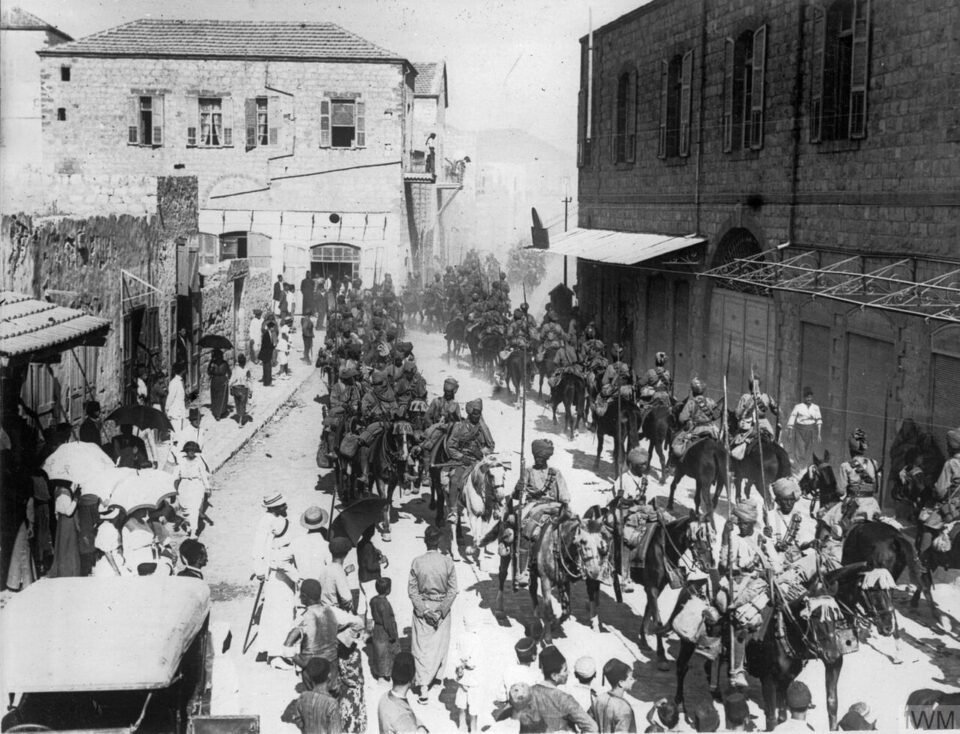
According to the Palestinian perspective, the Battle of Haifa, fought on September 23, 1918, was part of a broader British military campaign against the Ottoman Empire during the First World War. The battle involved Indian cavalry units serving under British command and resulted in British control of the Palestinian city of Haifa.
The Palestinian Embassy argues that describing the event as a “liberation” reflects a colonial-era narrative rather than the historical experience of the Palestinian people. It maintains that Palestine was subsequently placed under British military administration and later under the British Mandate, developments that eventually contributed to the implementation of the Balfour Declaration and the events leading to the Palestinian Nakba of 1948.
The statement also questions references to the Battle of Haifa as a symbol of shared India-Israel history, noting that the State of Israel did not exist in 1918. According to the Embassy, linking the battle directly to contemporary India-Israel relations risks overlooking the broader historical context of British colonial rule and Palestinian history.
At the same time, the Palestinian side expressed respect for the sacrifices made by Indian soldiers who fought and died during the First World War. However, it emphasized that honoring those soldiers should not come at the expense of historical accuracy or the Palestinian narrative.
The Embassy further highlighted that Indian soldiers fought in numerous campaigns across the Middle East, including Gaza, Jerusalem, the Jordan Valley, Damascus, and Aleppo, and argued that focusing exclusively on Haifa may distort the wider history of Indian participation in the war.
Referring to India’s historical support for Palestinian self-determination, the statement recalled the position of Mahatma Gandhi and India’s opposition to the 1947 United Nations Partition Plan for Palestine. It suggested that portraying the British capture of Haifa as a “liberation” may be inconsistent with India’s long-standing anti-colonial principles.
The Palestinian Embassy has called for an open and scholarly discussion on the subject, stressing the importance of preserving historical truth and ensuring that interpretations of the past remain grounded in documented facts and diverse historical perspectives.
The debate over the Battle of Haifa remains a sensitive issue, reflecting differing historical interpretations among Palestinians, Israelis, Indians, and historians worldwide. As discussions continue, the Embassy has urged greater awareness of the historical and political implications associated with the terminology used to describe the events of 1918.
